
Why Is the Correct Heating Element Application Important?
Choosing an industrial electric heating element is not only about "how many Watts?" and "how much does it cost?". A heating element must be selected according to the machine, size, voltage, connection, material, working temperature, installation and working environment.
From the outside, a heating element may look like a simple part. But if it is selected wrong or installed wrong, it can create serious problems: machine stoppage, high energy consumption, blown fuses, leakage current, burned products, poor quality and early failure.
That is why in industrial applications, it is not enough to ask only for the price. It is important to understand the application and choose the correct technical solution. 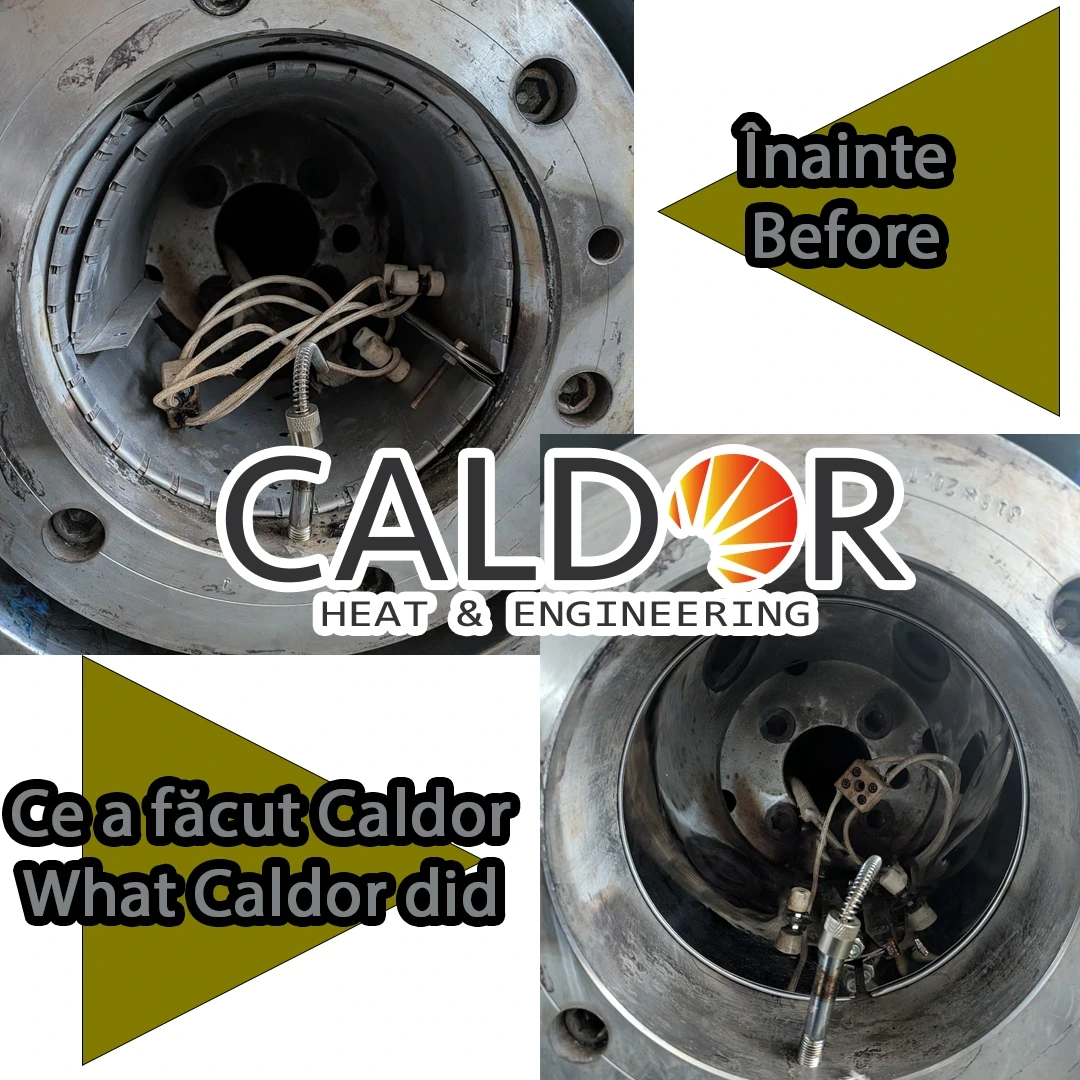
It Is Not Enough to Choose Only by Power
One of the most common mistakes is choosing a heating element only by Watt value.
A 3000W heating element does not work the same in every application. The same power can behave differently:
- in water
- in oil
- in air
- on a metal surface
- on an extruder cylinder
- inside a mold
- inside a boiler
- inside a tank
Every medium takes and transfers heat differently. Water, oil, air, metal and plastic do not heat up in the same way.
For this reason, power must be selected according to the application. More Watts does not always mean a better solution. In some cases, too much power can damage the heating element faster.
What Problems Come From Wrong Dimensions?
Correct dimensions are very important. For band heaters, ceramic heaters, mica heaters, cartridge heaters, immersion heaters and flange heaters, a wrong size can directly cause failure.
For example, if a band heater does not fit well on the cylinder, it will not have proper contact with the surface. Without good contact, heat does not move correctly into the machine. It stays inside the heater, and the heater overheats.
Wrong dimensions can cause:
- poor contact with the surface
- poor heat transfer
- overheating of the heater
- hot and cold zones
- poor product quality
- higher energy consumption
- damaged insulation
- blown fuses
- leakage current
- shorter lifetime
That is why diameter, length, width, cable exit, hole position, connection direction and mounting tolerances must be checked correctly.
Why Must the Technical Part Be Correct?
A heating element should not be selected only from a photo or only by looking at an old part. In many cases, the old part has already worked under heavy conditions and may be deformed or changed.
For the right choice, these details are important:
- working voltage
- total power
- phase connection
- working temperature
- working environment
- heater type
- material
- mounting dimensions
- surface contact
- cable exit
- sensor type
- sensor position
- control system
If these details are not correct, the heating element may work at the beginning, but it may not work safely and steadily for a long time.
Too Much Power Can Create Serious Failures
In heating element applications, one very important point is watt density. In simple words, it shows how much power is placed on a certain surface area.
If the power is too high for that surface, the heating element becomes too hot. This is especially dangerous in water, oil, chemical liquids, boilers, tanks and plastic processes.
Wrong power can cause:
- local boiling in water
- fast scale build-up
- burning of oil
- carbon build-up
- burning of plastic material
- tube deformation
- insulation drop
- short circuit
- heater failure
- machine stoppage
That is why the idea "let us use more Watts so it heats better" is not always correct. The good solution is the right power for the right application.
The Right Material Matters a Lot
The working environment decides which material must be used. Water, oil, humidity, chemical vapors, high temperature, plastic gases or mechanical contact can affect the lifetime of the heating element.
A heating element for water is not always suitable for oil. A heating element for air is not automatically suitable for a boiler. A heating element for plastic machines should not be made the same way as one for HoReCa equipment.
Wrong material can cause:
- rust
- holes in the tube
- leakage current
- insulation loss
- deformation
- fast failure
- safety problems
That is why the material must be selected according to the application, not only according to price.
Wrong Installation Can Damage Even a Good Heating Element
Even a correctly produced heating element can fail quickly if it is installed wrong.
The most common installation mistakes are:
- running the heater dry or in open air when it should not
- poor contact with the surface
- wrong tightening
- over-tightening
- cable placed too close to a very hot area
- sensor installed in the wrong place
- wrong voltage connection
- liquid heater used without liquid
- temperature controller set incorrectly
These mistakes can damage both the heating element and the machine.
What Do You Gain With the Right Heating Element?
A correctly selected and correctly installed heating element gives clear benefits:
- fewer machine stops
- fewer machine stops
- more stable temperature
- better energy use
- safer operation
- better product quality
- lower maintenance cost
- fewer unexpected failures
- better process control
In industry, one small part can stop a complete production line. That is why the heating element must be selected correctly from the start.
Caldor Heat Engineering SRL - Correct Industrial Heating Solutions
Caldor Heat Engineering SRL produces industrial electric heating elements and heating solutions for different applications.
Products include:
- mica band heaters
- ceramic band heaters
- cartridge heaters
- tubular heaters
- immersion heaters
- flange heaters
- boiler heating elements
- finned heaters
- custom heating elements
We do not see the heating element as just a part. We check the machine, application, temperature, working environment, material, connection and installation.
Our goal is simple: the right heating element for the right application.
Choosing a heating element is not just about "how many Watts?" and "how much does it cost?".
It means correct size, correct material, correct power, correct installation and correct application.
Conclusion
An electric heating element should not be treated as a simple spare part. If it is selected wrong, it can cause production stops, high energy use, failures, losses and safety risks.
If it is selected correctly, it works longer, safer and more efficiently.
The correct heating element is not only the cheapest one. It is the one that fits your application.